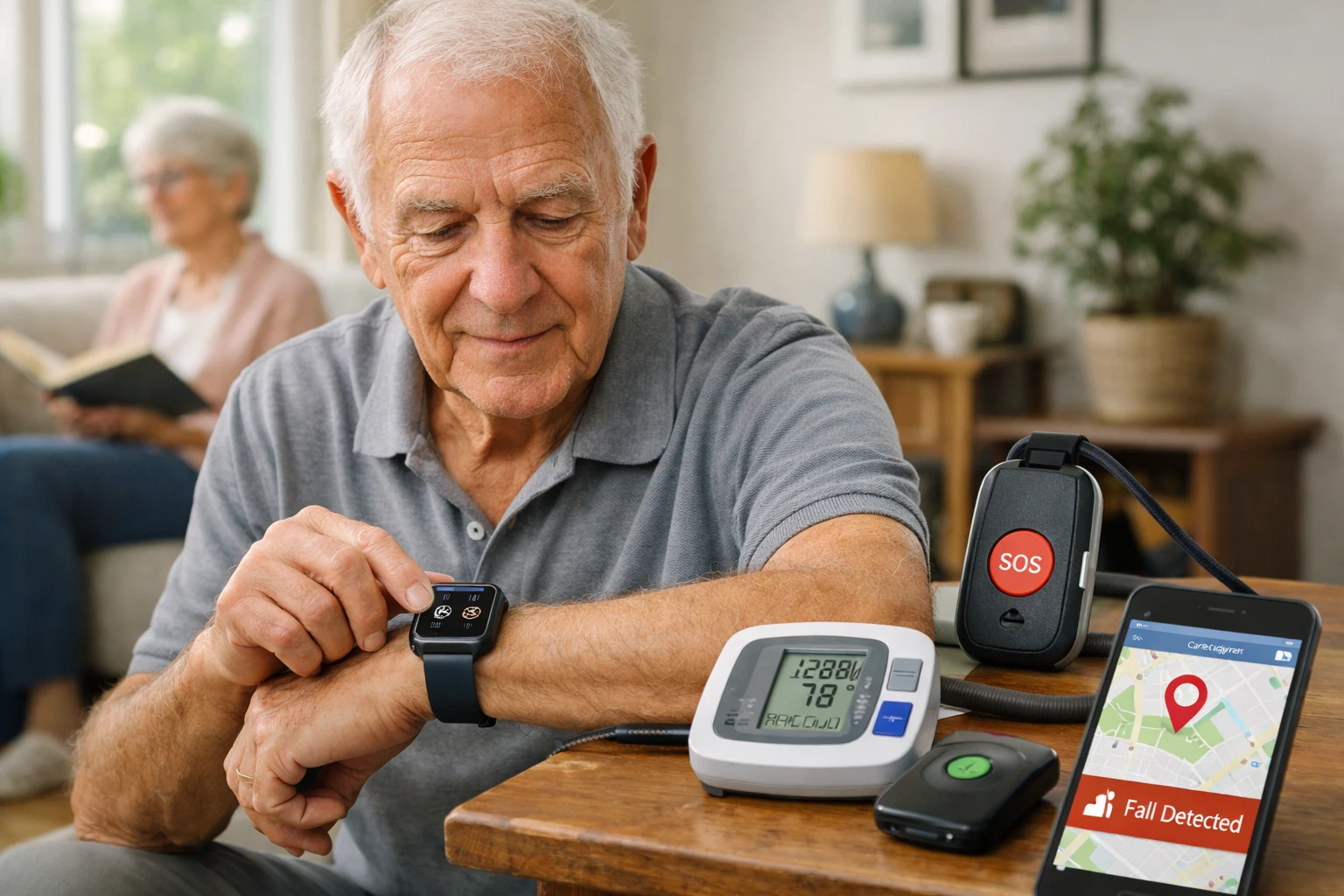
Wearable technology for elderly individuals has moved far beyond step counting and fitness tracking. Today, wearable devices for seniors are designed to address daily safety concerns, including falls, sudden medical events, mobility limitations, and the need for rapid emergency response. As seniors choose to live independently, families and caregivers are turning to wearable health devices for their elderly family members to reduce risk.
Modern health gadgets for seniors typically combine emergency SOS functions, fall detection, heart rate monitoring, and location tracking into compact devices such as watches, pendants, or clip-on units. Some wearables also monitor long-term health trends, including heart rhythm irregularities and blood pressure patterns, which can support early intervention when shared with caregivers or healthcare professionals.
However, not all wearable technology for elderly users serves the same purpose. The market is broadly divided between medical alert wearables for seniors, which prioritize emergency response and monitoring, and consumer smartwatches, which blend safety features with lifestyle and wellness tracking. Each approach involves different tradeoffs in reliability, ease of use, ongoing costs, and caregiver involvement. A study reported that older adults who used wearable devices were about 1.6 times more likely to meet national guidelines for weekly physical activity than those who did not.
Understanding these differences is critical when evaluating the best wearable tech for elderly daily safety. This article examines the current landscape of wearable devices for seniors, focusing on how specific features, such as fall detection, emergency alerts, heart rate monitoring, blood pressure tracking, and GPS location sharing—contribute to safer independent living.
Daily Safety & Health Risks Wearable Tech Addresses
Here are four major safety and health risks that wearable gadgets monitor for seniors living alone.
Fall detection
Falls are a leading cause of injury and loss of independence among seniors. Wearable tech now includes features like motion sensors, accelerometers and algorithms that detect falls and trigger alerts to caregivers or emergency services.
Vital-sign monitoring (heart rate, blood pressure)
Monitoring vital signs is another crucial use-case. A wearable heart rate monitor for elderly can track heart rhythm, alert for abnormal rates, and provide continuous data rather than periodic check-ups. Meanwhile, blood pressure wearables offer cuff-less alternatives for manual BP measurement, enabling proactive detection of hypertension or fluctuations.
Emergency alert & location tracking
Medical alert wearables for seniors are essential for people living alone or remotely. These are devices that send SOS signals, share GPS location and connect to monitoring services. It provides peace of mind for their families who live far or are away for some time.
Medication and routine reminders
A less obvious but important role for wearable health devices for seniors is reminding about medications, hydration, or movement schedule. Consistent reminders support daily safety by reducing incidents tied to missed meds or sedentary behavior.
Top Wearable Devices for Elderly Daily Safety and Health Monitoring
The following list highlights leading wearable devices for seniors, organized by device type and primary safety function. Each category addresses specific daily risks—such as falls, medical emergencies, chronic condition monitoring, and location tracking—to support safer independent living.
Smartwatches & Health Wearables
-
Apple Watch (Series 11)

Functions:
- Heart rate monitoring, ECG (detects irregular rhythms)
- Fall detection + Emergency SOS
- GPS tracking & cellular options
- Activity/sleep tracking, blood oxygen (varies by model)
- Crash detection & health insights
Price:
- GPS: $399
- GPS + Cellular: $499
Where to Buy:
-
Medical Guardian MGMove

Functions:
- SOS button + 24/7 professional monitoring
- GPS location tracking
- Two-way voice communication
- Step tracking, reminders, weather info
- Optional fall detection (can alert monitoring center)
Price:
- Device: ~$199.95
- Monitoring subscription: ~$42.95/month
- You can pay extra to get add-ons for multiple services. Check here.
Where to Buy:
-
Bay Alarm Medical SOS Smartwatch

Functions:
- Emergency/SOS alert button
- GPS tracking & 24/7 monitoring
- Optional automatic fall detection (additional cost depending on plan)
- Step tracking & basic health tools
Price:
- Device: $199
- Monthly monitoring subscription starts at $39.95. Check here.
Where to Buy:
-
Lifeline Smartwatch (formerly Philips Lifeline)

Functions:
- Help button with connection to trained specialists
- Heart rate monitoring & step tracking
- GPS assistance (where plan allows)
- 24/7/365 support access
Price:
- One-time device fee ~$159 + service plans roughly $34.95–$39.95/month
Where to Buy:
Mobile Alert & Location Wearables
-
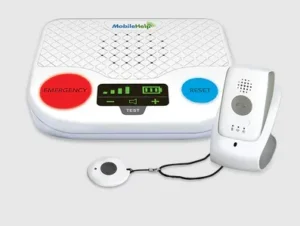
MobileHelp Systems (with GPS pendant/watch options)
Functions:
- SOS button with cellular emergency connection(connects you instantly with trained U.S.-based responders)
- GPS location trackingto pinpoint a user’s location when help is summoned
- Nationwide cellular coverage — works at home or on the move without a landline
- Waterproof wearable help button/pendant that can be worn on wrist or around the neck (includes waterproof button for shower use)
- Optional add-ons available (e.g., automatic fall detection for an additional monthly fee)
- Caregiver app tools and alerts depending on plan (location requests, system status alerts)
Price:
- Classic plan (in-home focused): starts around $24.95/month
- Solo mobile GPS plan (for on-the-go wearable/pendant): typically $34.95–$39.95/month
- Mobile Duo Bundle (two mobile units): about $49.95/month
- Home Duo Bundle (in-home + mobile coverage): around $44.95/month
Equipment (pendant or wearable device) is often included at no extra cost with an active plan (no equipment fees on many plans).
Where to Buy:
Health-Check Wearables (Dedicated Devices)
-
AliveCor KardiaMobile 6L (Portable ECG)

Functions:
- Six-lead ECG recorder
- Detects atrial fibrillation & rhythm irregularities
- Quick spot checks — used with phone app
Price:
- $129
Where to Buy:
What To Look For When Choosing Best Wearable Devices For Seniors
When selecting wearable devices for seniors, it’s important to evaluate certain features:
- Usability and user-interface: Large, clear display; easy navigation; simple buttons; minimal learning curve.
- Accuracy of sensors: Reliable heart-rate, BP or motion sensors; validated fall detection.
- Battery life, connectivity and reliability: Long battery, stable connection (Bluetooth, WiFi, cellular), minimal downtime.
- Data security, privacy and health-data integration: Secure transmission, compliance with health standards, ability to share data with caregivers or providers.
- Cost, support and caregiver integration: Affordable pricing; good customer support; ability to link with family or professional monitoring.
A well-designed device helps overcome some of the adoption barriers senior members of your family face, such as technological anxiety, discomfort, or complex interfaces. Among elderly, (age 65 +), only about 14.4% are reported using a wearable device, states one survey.
Future trends in wearable devices for seniors
What’s coming next in this space?
- AI-driven predictive health alerts: Beyond simple monitoring, devices will use AI to detect early signs of issues (for example predict a fall before it happens).
- Integration with smart home/IoT systems: Wearables for seniors will interface with home sensors, voice assistants, medication dispensers, creating a holistic safety ecosystem.
- Advanced sensors: New health gadgets for seniors will monitor more than heart rate and blood pressure—think glucose monitoring, balance sensors, gait analysis, fatigue detection.
- Personalised wearable health devices for seniors: With improved algorithms and profiling, wearables will adapt to individual health profiles, recommending actions, connecting directly to caregivers or health systems.
- Growth in “medical alert wearables for seniors” market: As technology matures and cost decreases, the market will expand dramatically—some forecasts suggest 50%+ senior adoption in certain segments by 2030.
These trends indicate that wearable technology for elderly populations is moving from optional gadgetry to standard health-tooling, embedded in everyday life.
How caregivers and families can support wearable adoption
Families and caregivers play a vital role. Here are best practices:
- Training and setup: Help the senior set up the device, enable alerts, simplify settings, ensure it fits comfortably.
- Monitoring and responding: Establish a protocol—who receives alerts, how to respond, how to maintain battery, connectivity, and data sharing.
- Encouraging daily use and habit formation: Wearables work only when worn consistently; building a habit (e.g., wearing it every morning) matters. Use positive reinforcement.
- Selecting the right plan and device: Together evaluate features needed, budget, caregiver connectivity, service plan, emergency monitoring options.
- Addressing concerns: Discuss privacy, ease of use, comfort and reassure the senior that devices are for support, not surveillance.
With caregiver involvement, the adoption of wearable devices for seniors becomes more likely, and the benefits more sustained.
FAQs
Q 1: What is the difference between a standard smartwatch and a wearable technology for elderly device?
While standard smartwatches focus on lifestyle features (music, apps, etc.), wearable devices for seniors emphasise safety-features: fall detection, emergency alerts, simplified UI, long battery and caregiver connectivity.
Q 2: Are blood pressure wearables for seniors accurate compared to traditional cuffs?
Some newer wearables claim cuff-less BP monitoring; however accuracy varies and may not yet fully replace traditional devices. They are useful for trends and alerts but should be validated by a healthcare provider.
Q 3: How reliable is fall detection in medical alert wearables for seniors?
Fall-detection has improved, but no system is perfect. False positives and negatives can occur. Choose reputable devices and maintain realistic expectations—complementing, not replacing, in-person care.
Q 4: How often should an older adult wear a health gadget to get benefit?
Regular use is key. Studies suggest older adults who consistently use wearables are more likely to meet activity guidelines. Occasional use offers limited benefit.
Q 5: Will the data from wearable devices for seniors be shared with my doctor?
Many devices support data sharing with apps or portals; however, integration depends on the device and healthcare system. Check whether your device supports export or sharing and whether your doctor accepts it.
Q 6: What about cost and maintenance for these devices?
Costs vary widely—from basic activity trackers to premium medical-alert wearables with monitoring service subscriptions. Factor in upfront cost, subscriptions, battery/charging requirements and support when choosing.
Conclusion
Wearable technology for elderly individuals is no longer a futuristic concept—it’s a practical tool for enhancing daily safety, health monitoring and independence. From wearable health devices for seniors tracking heart rate and blood pressure, to medical alert wearables for seniors enabling quick response during emergencies, the possibilities are significant.
While adoption remains modest, evidence shows older adults who use these devices are more physically active and alert to changes in their health. The key to maximising benefit lies in choosing the right device—one that fits the senior’s lifestyle, health profile, comfort level—and supporting them with training, caregiver involvement and ongoing use.
As the market evolves, the best wearable tech for elderly will increasingly integrate advanced sensors, AI, connectivity and smart-home integration. For families and older adults looking to boost safety, confidence and health oversight, now is a great time to explore how wearable devices for seniors can become an integral part of their daily routine.